Brinson Prize Fellow · Princeton University → NHFP Hubble Fellow · Johns Hopkins · September 2026

David J.
Setton

I study the co-evolution of massive galaxies and their supermassive black holes across cosmic time, using joint optical and far-infrared observations to constrain their star formation histories.

David J. Setton
01

About

I am a Brinson Prize Fellow in the Department of Astrophysical Sciences at Princeton University, where I have used a wide range of data spanning the rest-optical to the far-IR to constrain the total energy output of massive galaxies and AGN. In September 2026 I will move to Johns Hopkins University as an NHFP Hubble Fellow. My work spans the SQuIGGLE, RUBIES, UNCOVER/MEGASCIENCE, MINERVA, and PFS-SSP collaborations.

I am interested in the physical mechanisms that shut down star formation in massive galaxies, the panchromatic SEDs of Little Red Dots, and the star formation histories of the first massive galaxies revealed by JWST.

Outside of work, I am usually watching and reviewing movies, playing guitar in my band, or rooting for the Seahawks.
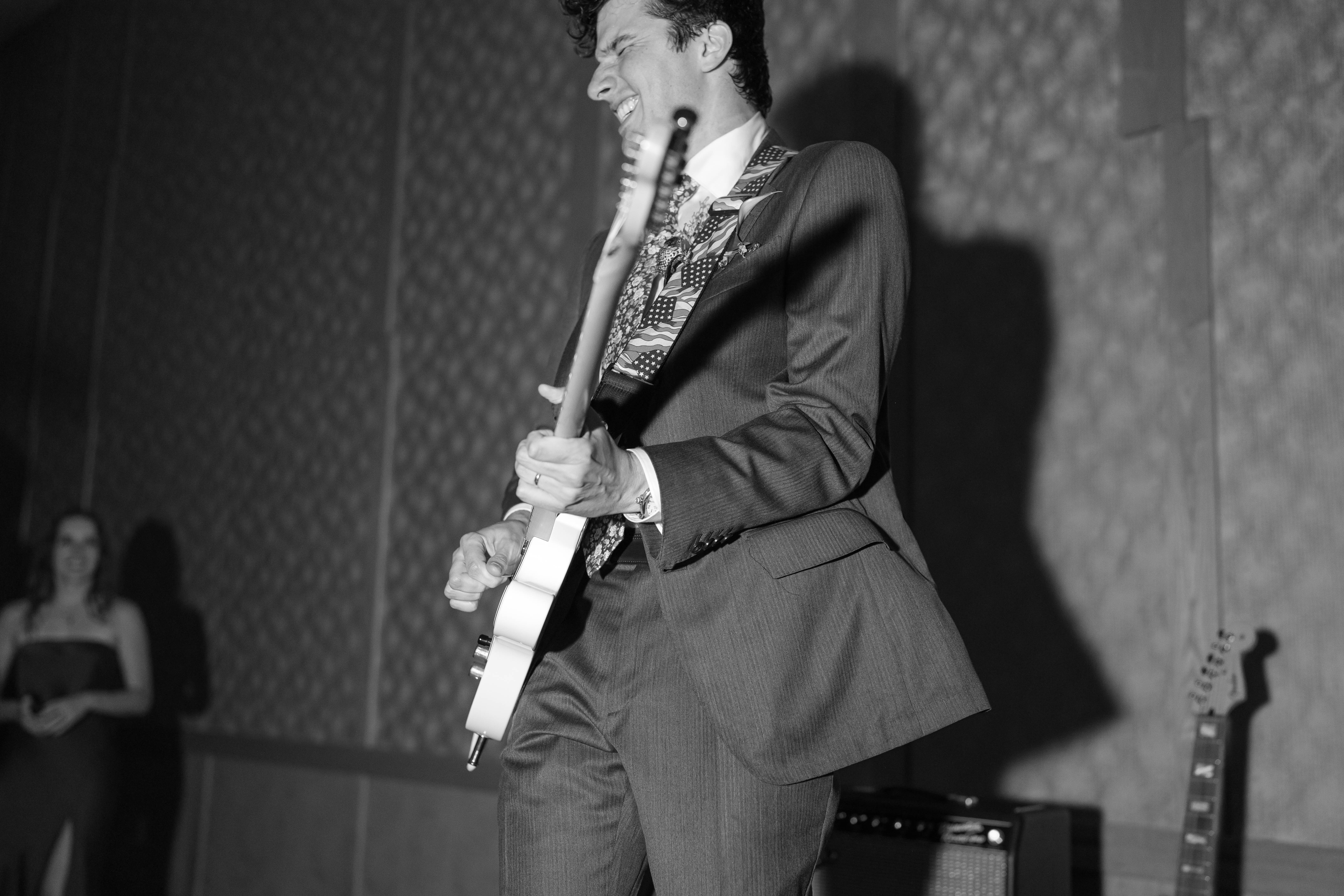
David playing "Isn’t She Lovely" at his wedding reception
“Isn’t She Lovely” at our wedding, July 2025

Education

Ph.D. Physics, University of Pittsburgh — 2023

M.S. Physics, University of Pittsburgh — 2019

B.S. Physics & Astronomy, University of Arizona — 2017

Collaborations

SQuIGGLE · RUBIES · UNCOVER/MEGASCIENCE · MINERVA · PFS-SSP

02

Research

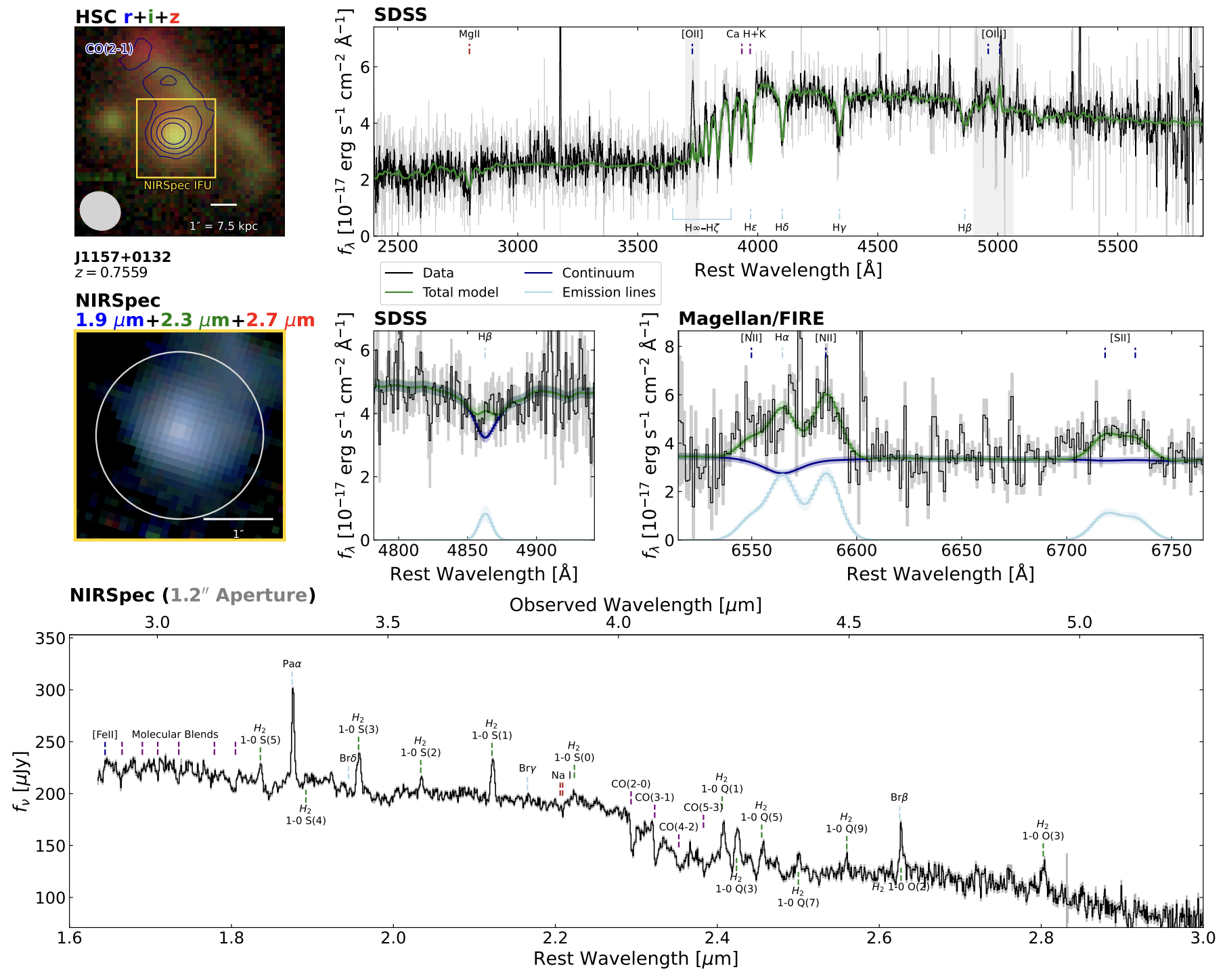
SED + spectral fit of a post-starburst galaxy

Post-starburst galaxies in the wake of cosmic noon

As part of the SQuIGGLE Survey, I lead population-level studies of post-starbursts selected from SDSS and DESI. Using novel joint SED and spectroscopic fitting, my collaborators and I have constrained their star formation histories, structures, and molecular gas content. Most recently, I have led a large ALMA CO(2–1) program to understand the surprising diversity of cold gas reservoirs in z∼0.7 post-starbursts, and an ongoing follow-up ALMA+JWST program to resolve CO(2–1) and Pa-α at sub-kpc scales, revealing the dust-obscured star forming cores of these systems and allowing us to securely measure their true star formation rates. I am looking forward to extending this work with the PFS-SSP Galaxy Evolution survey, where I will study the rate of rapid quenching in mass-complete samples at cosmic noon.

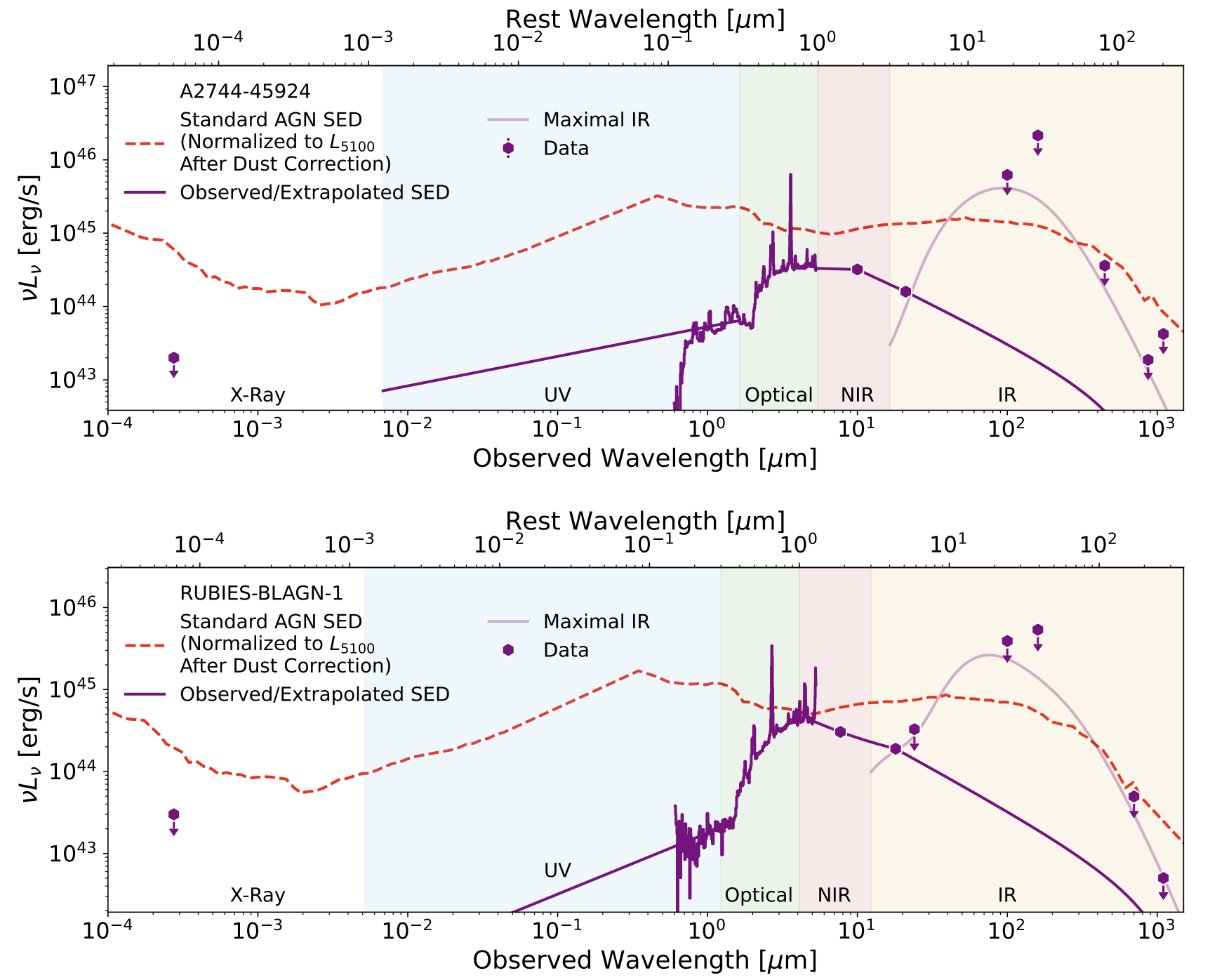
V-shaped SED of a Little Red Dot

The mysterious V-shaped SED of Little Red Dots

With RUBIES and UNCOVER, I work to uncover the origin of the unusual continuum and line emission in Little Red Dots. Using PRISM spectra from the Dawn JWST Archive, I identified extremely red Hα emitters and showed that their spectral turnover ubiquitously occurs at 3645 Å — the Balmer limit. Combining deep JWST/MIRI and ALMA imaging, I set the tightest constraints to date on the LRD infrared luminosity and significantly lower bolometric luminosities, finding strong tension with models that invoke heavy reddening of an intrinsically blue SED. We used these highly constrained SEDs to propose new bolometric constraints for Little Red Dots that imply that they are as much as 10x less luminous than previously assumed (and, potentially, 10x less massive). In the coming years, I am looking forward to new JWST spectroscopy that will better constrain the poorly understood near- and mid-IR in LRDs (JWST-GO #10445, PIs: de Graaff and Setton; JWST-GO #11618, PIs: Ma and Setton).

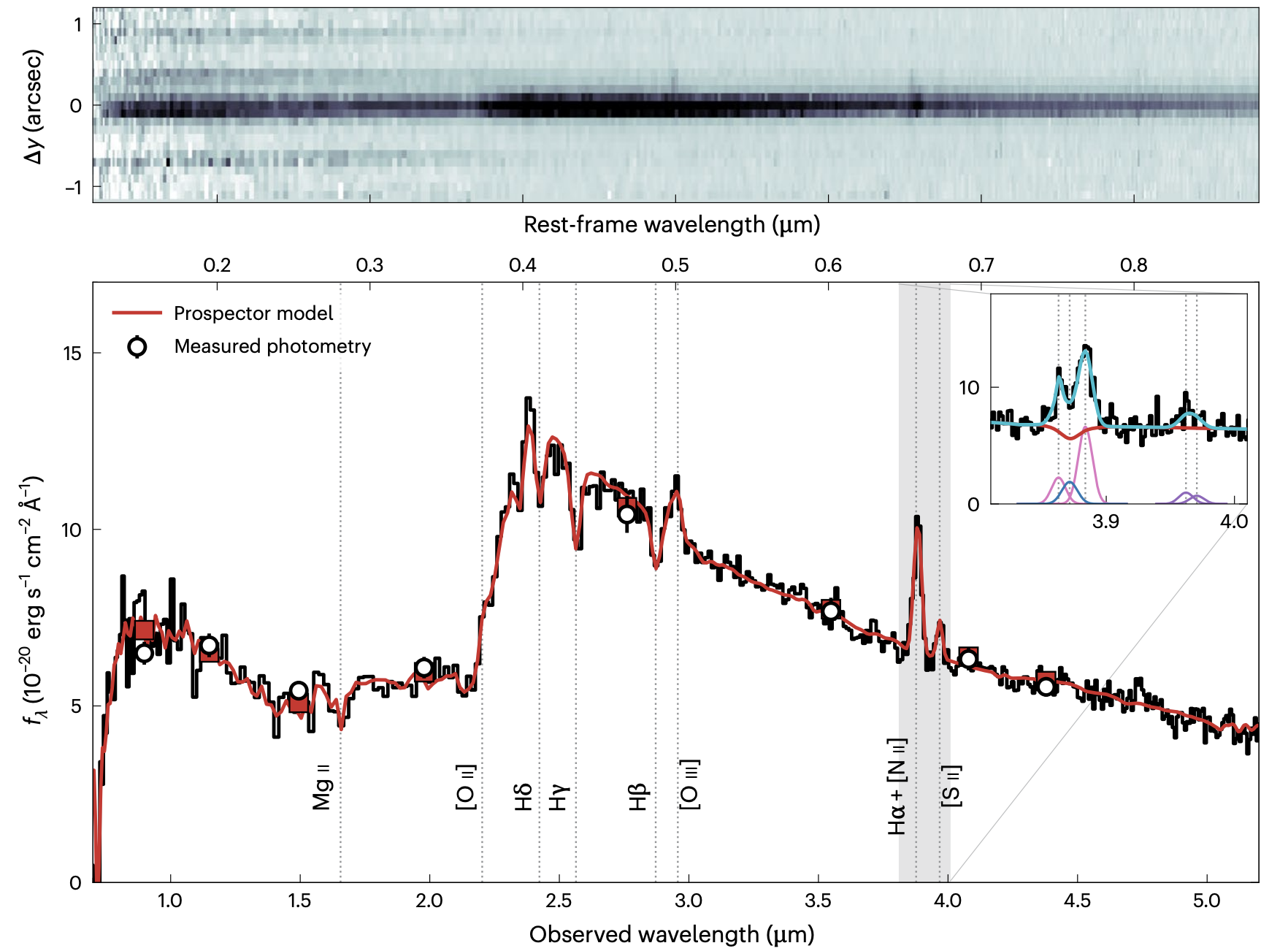
Star formation history of a z=5 quiescent galaxy

The first massive, quiescent galaxies with JWST

Within RUBIES and UNCOVER, I study the assembly and quenching histories of the first quiescent galaxies, identified by their strong Balmer breaks. We have uncovered a suite of systems that defy expectation: a log M∼11 quenched galaxy at z=5, a passive log M∼10.3 system at z=7, and a massive dusty galaxy at z∼4 with very low equivalent-width Hα whose star formation history implies very early formation. In the coming years, I am excited to connect these populations of quenched galaxies to their progenitors with joint ALMA+JWST studies of dusty star forming galaxies, and to use upcoming ALMA and NOEMA programs to refine measurements of the star formation histories of the first quenched systems.

03

Mentorship

Graduate Students

  • Jared Siegel Princeton Cosmic-noon quiescent galaxy reddening · JWST Cycle 4 PI
  • Yilun Ma Princeton Little Red Dot demographics and SEDs · JWST Cycle 5 PI
  • Yunchong Zhang Pitt Massive post-starbursts and quiescent galaxies at z∼1–5
  • Abby Mintz Princeton Low-mass galaxies and bursty SFHs at cosmic noon
  • Lena Treiber Princeton High-redshift broad-line AGN demographics
  • Kate Shavelle Princeton Host-galaxy properties of mid-IR-selected luminous AGN

Undergraduates

  • Maggie Verrico Pitt Merger signatures in massive post-starbursts → PhD at UIUC
  • Anika Kumar Pitt Gas-rich neighbors of SQuIGGLE post-starbursts → PhD at RIT
  • Erin Stumbaugh Pitt The environments of post-starburst galaxies → Masters at Villanova
  • Belinda Wu Princeton Bursty star formation at z∼2 → PhD at National Taiwan U.
  • Hy Truong Princeton Color gradients in massive galaxies at z∼2 → PhD at SDSU
  • Austin Guo Princeton X-ray properties of mid-IR-luminous post-starburst galaxies
04

Contact